

Introducing young learners to alphabet letters and sounds is an exciting milestone, and books are one of the most effective and enjoyable ways to build those early literacy skills. Whether you’re a teacher, homeschool parent, or caregiver, choosing the right alphabet books can make all the difference in helping children connect letters to their corresponding sounds. Let’s look at some of the best books for teaching the alphabet.
Why Use Books to Teach Alphabet Letters and Sounds?
Books provide many opportunities for teachers and parents to highlight the letters that give a word’s beginning sound. As you read together, you can focus on the following skills.
- Engaging repetition that reinforces sounds and shapes
- Visual support for letter recognition
- Context for how letters and sounds appear in real words
- Opportunities for interaction, rhyming, and vocabulary building
With the right books, learning becomes playful, meaningful, and memorable.
Here are Our Top Alphabet Books to Teach Letters and Sounds
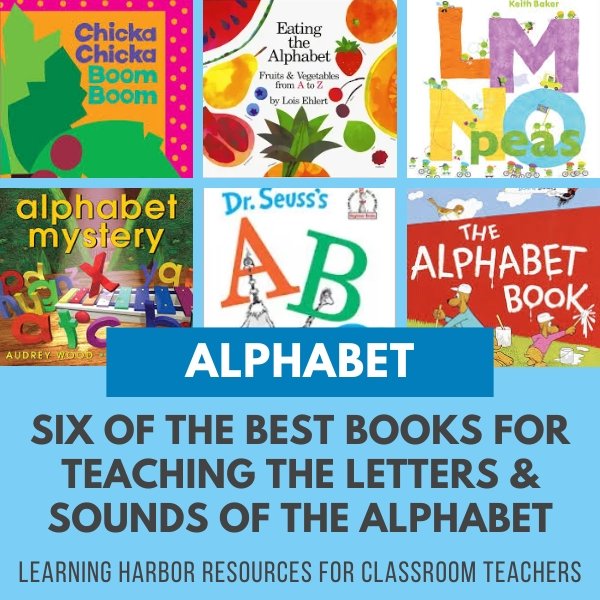
1) Chicka Chicka Boom Boom by Bill Martin Jr. and John Archambault
A classroom classic, this rhythmic story introduces each lowercase letter as it climbs up a coconut tree. The repetition and playful flow make it perfect for helping children hear and remember alphabet letters and sounds.
Activity idea: After reading, use magnetic or paper letters to retell the story and practice matching uppercase and lowercase pairs.
2) Eating the Alphabet by Lois Ehlert
Vibrant illustrations of fruits and vegetables anchor each letter sound. This book is especially useful for vocabulary development and reinforcing beginning sounds.
Try this: Have students name the food and name other words that begin with the same sound.
3) LMNO Peas by Keith Baker
Each letter is explored through action words performed by adorable peas. The text naturally introduces verbs and vocabulary tied to the alphabet letters and sounds.
Extension activity: Create your own “letter peas” pages with new action words!
4) Alphabet Mystery by Audrey Wood
This imaginative story follows the lowercase letters on an adventure to find the missing “x.” It’s engaging and perfect for practicing letter names and sounds through storytelling.
Teaching tip: Invite children to act out their favorite letters and their sounds.
5) Dr. Seuss’s ABC
Silly sentences and alliteration make this alphabet book a favorite for sound awareness. Each page emphasizes a specific letter with playful repetition.
Use it for: Sound isolation and identifying words that begin with the same letter.
6) The Alphabet Book by PD Eastman
The simple text and playful illustrations make this book especially appealing to preschool and early primary learners. Each illustration shows an animal whose name or action starts with that letter (like “A is for Ape” or “B is for Bear”), making the connection between the letter and its beginning sound clear and memorable.
Activity Idea: Use blank paper or a pocket chart to create an “Alphabet Zoo” where students add new pictures or words that start with each letter featured in the book.
Interactive Alphabet Books & How to Use Them
Books that invite participation can boost retention of alphabet letters and sounds:
- Lift-the-flap books like Where’s the Ladybug’s Letter?
- Touch-and-feel alphabet books
- Sound books with audio buttons
These formats help children make tactile and auditory connections to phonics skills.
How to Use Alphabet Books in Instruction
Here are some simple ways to bring books to life while teaching alphabet letters and sounds:
📚 1. Focus on One Letter at a Time
Choose a page or section that highlights your focus letter. Revisit the same book throughout the week for reinforcement.
🗣️ 2. Emphasize Sounds During Read-Alouds
Model the beginning sound and invite students to echo:
“B is for bear—/b/ /b/ bear!”
🎨 3. Pair Books with Hands-On Activities
- Letter crafts
- Sound hunts
- Picture sorts
- Playdough letter mats
🔁 4. Re-read for Rhythm and Repetition
Familiarity builds confidence. Repeated readings help kids connect the visual letter with its sound.
Building a Mini Alphabet Library
Consider organizing books by:
- Letter of the week
- Theme (animals, food, transportation)
- Type (rhyming, nonfiction, interactive)
- Rotating your selection keeps students excited while reinforcing alphabet letters and sounds in multiple ways.
Final Thoughts
Books are powerful tools for introducing and reinforcing alphabet letters and sounds. With rich illustrations, playful language, and engaging formats, they create meaningful literacy experiences that last. Whether you’re teaching in the classroom or at home, incorporating alphabet books into daily routines will set the foundation for strong reading skills.
Until Next Time…Happy Teaching