
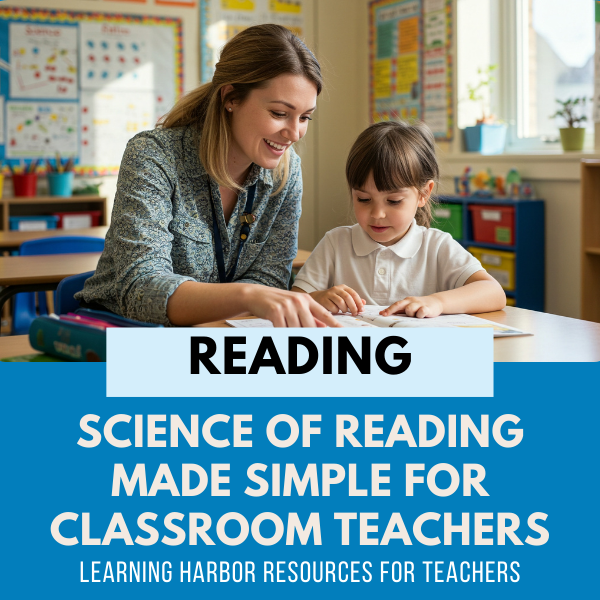

Teaching children how to read has always been one of the most important responsibilities in elementary education. While teaching methods and materials may change over time, the goal remains the same: helping every child become a confident, capable reader. Today, many teachers are hearing more about the Science of Reading, and with good reason. This research-based approach supports what experienced educators have long known clear, structured instruction helps students succeed.
The Science of Reading does not require abandoning everything you already do well. Instead, it provides clarity and reassurance that strong reading instruction is built on time-tested practices supported by research.
What the Science of Reading Really Is
The Science of Reading is a large body of research that explains how the brain learns to read. It brings together decades of studies from education, psychology, and neuroscience. At its core, it shows that reading is not a natural skill for most children. It must be taught clearly and intentionally.
Research consistently highlights the importance of:
- Phonemic awareness
- Explicit phonics instruction
- Vocabulary development
- Reading fluency
- Comprehension
When these components are taught systematically and practiced regularly, students are far more likely to become successful readers.
What the Science of Reading Is Not
For many teachers, the phrase “Science of Reading” can feel overwhelming. It is important to remember that it is not a scripted program or a passing trend. It does not replace good teaching, creativity, or professional judgment.
Instead, it supports what has always been done in classrooms:
- Clear explanations
- Repetition and practice
- Predictable routines
- Gradual release of responsibility
The Science of Reading simply helps teachers understand why these practices are so effective.
Why This Matters in Kindergarten Through Second Grade
Early literacy instruction sets the foundation for everything that follows. In Kindergarten through Second Grade, students are learning how sounds connect to letters, how words work, and how print carries meaning.
When instruction is aligned with the Science of Reading, students benefit from:
- Fewer gaps in foundational skills
- Increased confidence when reading
- Stronger decoding and word recognition
- Better comprehension over time
This is especially important for students who may struggle early on. Clear, explicit instruction gives every child a fair chance to succeed.
Keeping Reading Instruction Manageable for Teachers
One of the greatest challenges teachers faces is time. Planning lessons, prepping materials, and meeting individual student needs can quickly become overwhelming. Especially for first-year teachers or those teaching a new grade level.
This is where Life Saver Lessons make a meaningful difference.
Life Saver Lessons are designed to be low prep, easy to use, and classroom tested. They fit naturally into daily routines and support Science of Reading aligned instruction without adding extra stress to a teacher’s day. Instead of spending hours preparing materials, teachers can focus on what matters most: teaching and supporting students.
How Life Saver Lessons Support the Science of Reading
Life Saver Lessons focus on foundational literacy skills through:
- Clear skill targets
- Predictable formats that reduce student confusion
- Repeated practice for mastery
- Student-friendly activities that promote independence
Because these lessons are simple and structured, they work well for whole-group instruction, small groups, intervention, and literacy centers.They honor traditional teaching practices while aligning with what current research tells us about how children learn to read.
Learning Harbor Resources for Teachers on TPT
The Learning Harbor Resources for Teachers was created with busy educators in mind. This teacher-owned store offers Life Saver Lessons that support both teachers and students through dependable, easy-to-implement activities.
Learning Harbor Resources for Teachers focuses on:
- Science of Reading aligned literacy instruction
- Low-prep lessons that save time
- Clear routines that build student confidence
- Resources that work across multiple learning settings
Teachers appreciate having access to materials they can trust, especially when instructional time is precious.
A Supportive Approach for New and Experienced Teachers
Whether you are a first-year teacher or have years of experience, the Science of Reading offers reassurance. It confirms that strong reading instruction is built on clarity, structure, and consistency.
Using Life Saver Lessons from Learning Harbor Resources for Teachers helps reduce decision fatigue and supports confident teaching. These resources allow teachers to stay focused on students rather than materials.
Moving Forward with Confidence
The Science of Reading reminds us that effective instruction does not need to be complicated. When teachers use research-aligned practices and dependable resources, students thrive.
By building strong routines, using low-prep Life Saver Lessons, and leaning on trusted resources from Learning Harbor Resources for Teachers on TPT, teachers can feel confident knowing their instruction is grounded in both experience and research. Strong readers are built one lesson at a time, and teachers deserve tools that make that work easier.
RELATED LIFE SAVER LESSONS